Independent technical reference. Not affiliated with any manufacturer; no product is offered.
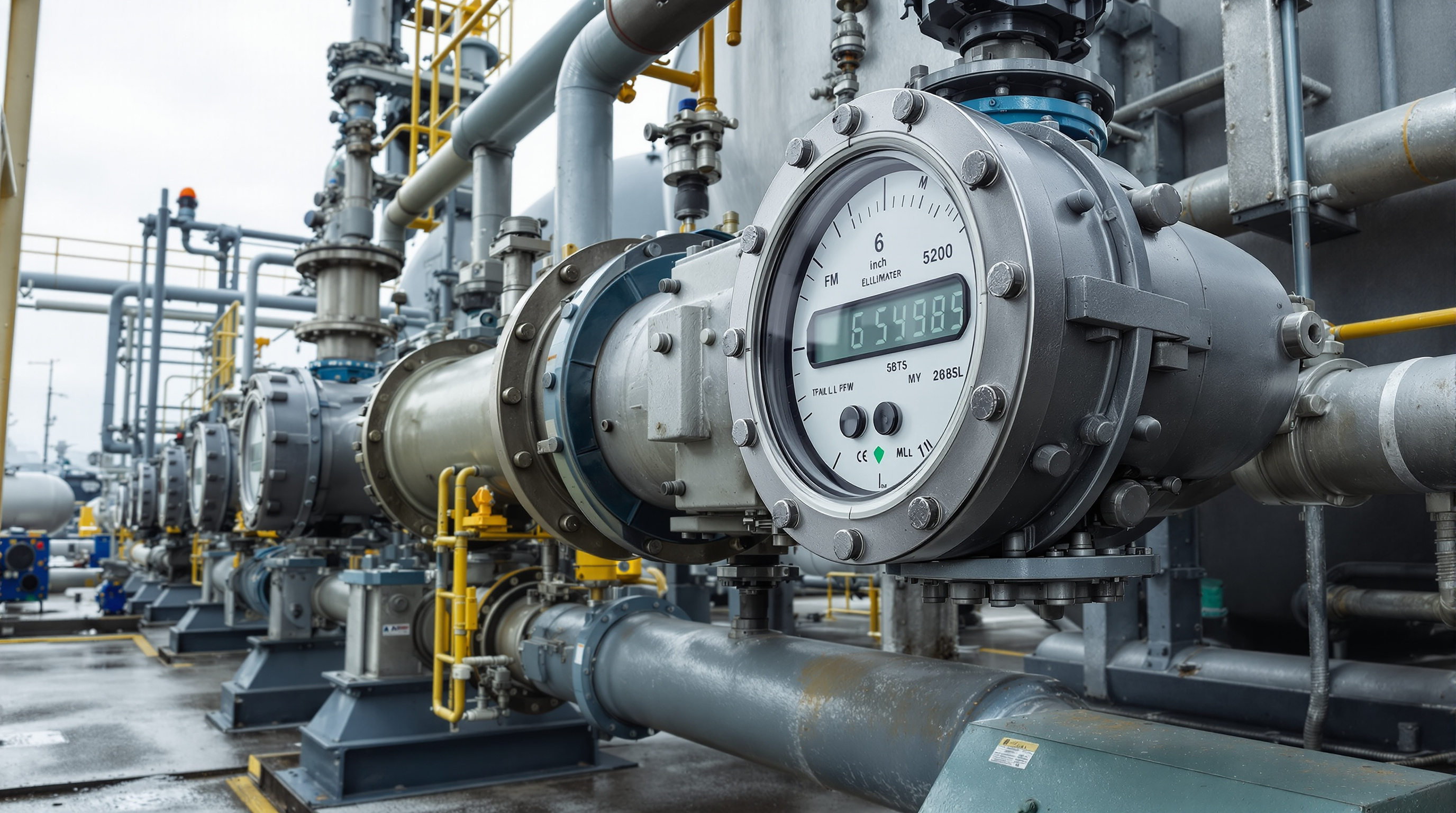
A 6-inch (DN150) rotary positive-displacement meter sits at the large end of the fuel-metering range — the size used for tanker-rack and depot loading where hundreds of litres per minute must be measured for custody transfer. This note explains what defines a meter of this size.
Why Go to 6 Inch
Line size follows flow. At bulk-loading rates, a smaller meter would either throttle the flow or run permanently near its maximum, wearing quickly and losing accuracy. A DN150 body opens the bore to pass high volume at moderate velocity, keeping the positive-displacement element inside its designed operating window and holding accuracy in the ±0.2–0.5% of reading band that custody transfer expects.
The System Around the Meter
At this scale the meter is one part of a metering skid. Upstream, a large-capacity air eliminator removes entrained vapour that would otherwise be measured as liquid — a serious concern during pump start-up on bulk lines. A strainer protects the rotor clearances. Downstream, a preset batch controller and back-pressure/valve arrangement start and stop the delivery cleanly. Temperature compensation corrects the metered volume to a reference temperature, as required for fair trade under standards like the API MPMS.
Installation Notes
- Support the weight — a DN150 meter and its register are heavy; the pipework must carry the load, not the meter body.
- Control surge — large-line valves closing quickly generate pressure spikes that drive up slip and stress the mechanism; use slow-closing or two-stage valves.
- Provide proving access — bulk meters are proved regularly against a pipe prover or master meter, so design in the connections from the start.
Where It Fits in the Range
Compare with smaller sizes such as the 1-inch DN25, and see the general Tokico technology overview. For the physics, start at positive-displacement meters.