Independent technical reference. Not affiliated with, endorsed by, or a distributor for Krohne. No product is offered; this page describes the meter's technology.
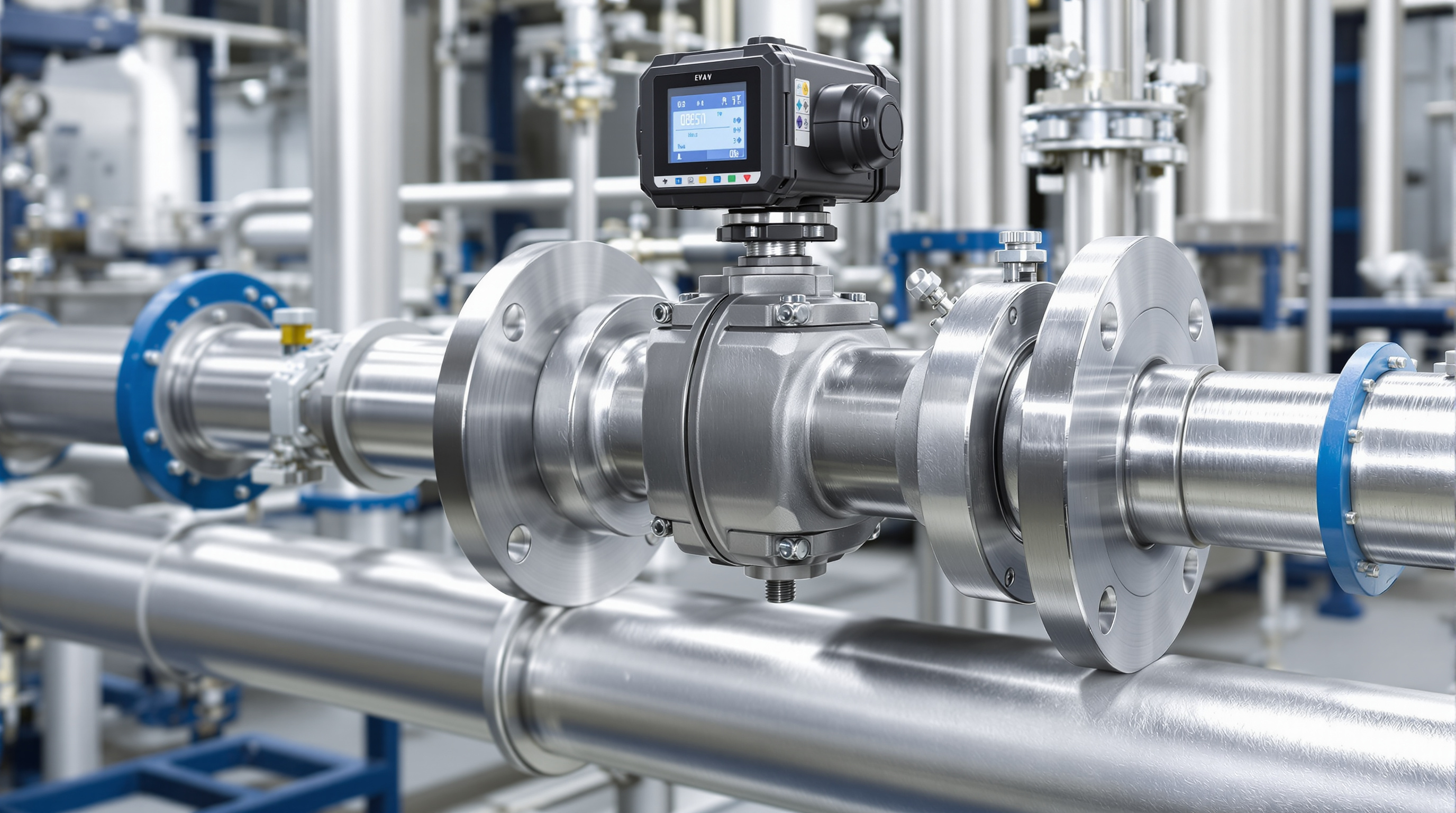
The Optiflux 1050 is a wafer-style electromagnetic flow meter — a compact, space-saving mag meter that clamps between two pipe flanges. This page explains the wafer mag-meter format and where it is used.
The Wafer Format
Instead of its own flanges, a wafer meter is a short, lightweight body sandwiched between the mating flanges of the pipe and held by the through-bolts. That makes it economical and easy to install in tight spaces, especially at smaller line sizes. Inside, it is a full electromagnetic meter: field coils, an insulating liner and electrodes that sense the flow-induced voltage.
Technology and Fluids
As a mag meter, the Optiflux 1050 measures conductive liquids — water, wastewater, chemicals, slurries — with no moving parts, no obstruction and no pressure drop, at accuracy around ±0.2–0.5% of reading. The liner (commonly a hard rubber or PTFE-type material) and electrode alloy are selected for the fluid, as explained on our electromagnetic flow meter page. It cannot measure non-conductive fluids such as oils or fuels.
Installation Essentials
Keep the pipe full, give a few diameters of straight run upstream, ground the meter well, and centre the wafer accurately between flanges so the bore lines up. Get those right and a wafer mag meter is a compact, long-life instrument. For the wider family, see the Krohne technology overview; to compare with other types, see flow meter types.
The induction principle behind these meters is also described in water-science references such as those published by the U.S. Geological Survey.