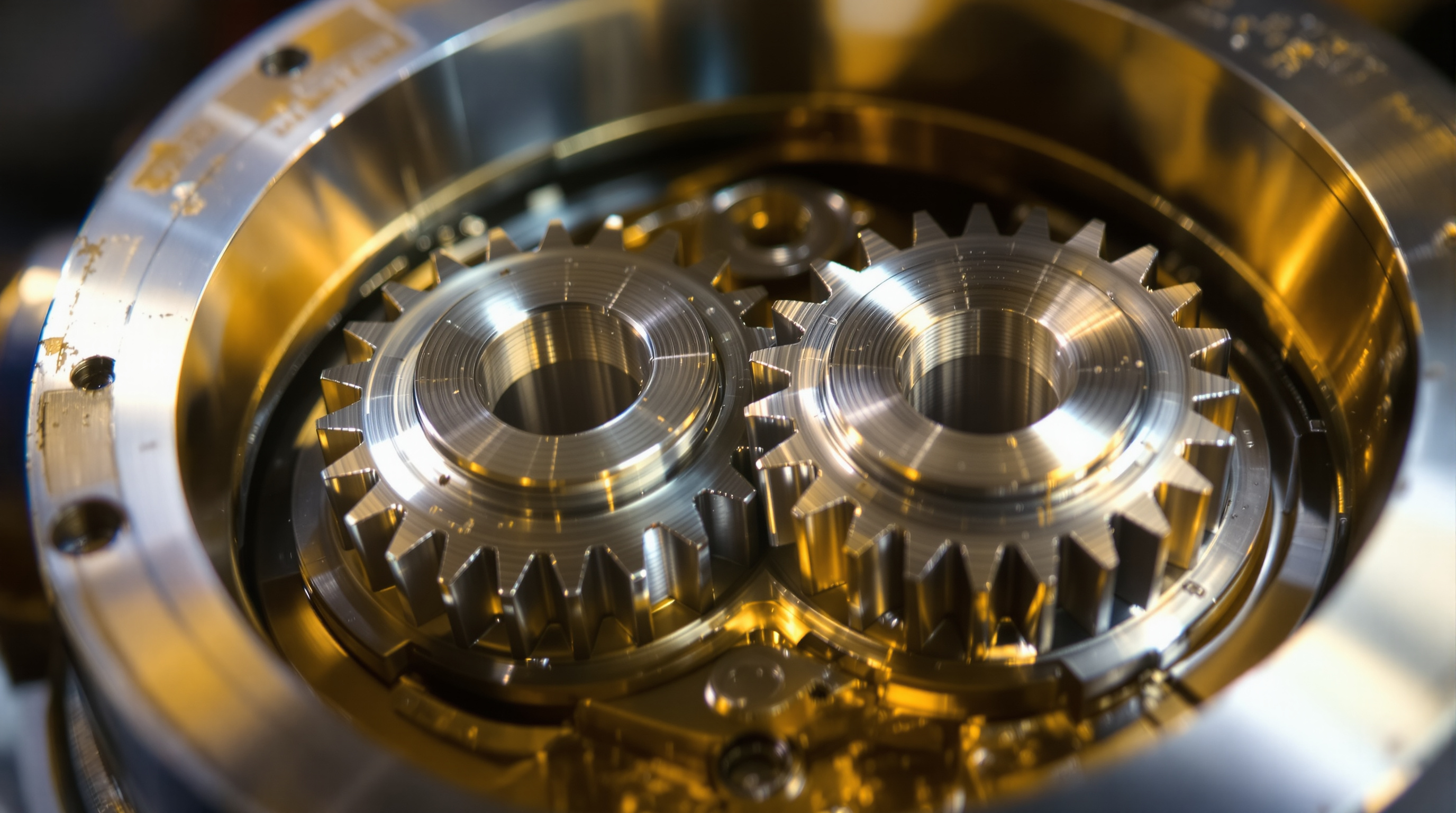
Positive-displacement (PD) meters are the mechanical accountants of flow measurement. Instead of inferring flow from velocity, they repeatedly fill and empty a chamber of precisely known volume, counting each fill. That direct approach makes them the technology of choice wherever fuels, oils and other viscous liquids must be measured accurately, from a delivery truck to a lubrication skid.
How They Work
Every PD meter has a measuring chamber and a moving element that sweeps a fixed volume per revolution. As fluid pushes the element around, it carries slugs of liquid from inlet to outlet. Count the revolutions (or the pulses derived from them) and you know the total volume, because each revolution equals a known, calibrated quantity. The main mechanical variants are:
- Oval gear — two meshing oval rotors trap a crescent of fluid between rotor and chamber wall on each rotation. Simple, robust and excellent on viscous fluids.
- Rotary piston (oscillating piston) — a single piston oscillates in a cylindrical chamber, displacing a set volume per cycle. Common in fuel dispensing and water metering.
- Nutating disc — a disc wobbles ("nutates") in a conical chamber, moving a fixed volume per wobble. The classic domestic and small-line design.
- Rotary vane and lobed impeller — vanes or lobes carry fluid in known pockets; used in higher-flow petroleum service.
Why Viscosity Is an Advantage
In most velocity-based meters, viscosity is the enemy — it thickens the boundary layer and skews the reading. PD meters flip that logic. A more viscous fluid seals the tiny clearances between the moving element and the chamber more effectively, reducing internal slip (the small amount of fluid that leaks past unmeasured). That is exactly why PD meters dominate oil and fuel metering, where fluids that defeat a turbine or magnetic meter are handled with ease. This is the operating principle behind the rotary-piston fuel meters associated with names like Tokico and Liquid Controls, and the oval-gear meters associated with Oval and Macnaught.
Accuracy, Slip and Rangeability
Good PD meters achieve ±0.1% to ±0.5% of reading, with excellent repeatability — the quality that matters most for batching and custody transfer. Their main error source is slip, which grows as viscosity falls and as differential pressure across the meter rises. Because slip is roughly constant while throughput scales with flow, accuracy is best in the upper part of the range and degrades at very low flow. Manufacturers publish a viscosity-dependent accuracy curve for exactly this reason.
Strengths and Limitations
Strengths: high accuracy and repeatability on viscous fluids; no straight-run requirement, so they fit tight skids; a purely mechanical local totaliser needs no power; well suited to custody transfer under standards such as the American Petroleum Institute's Manual of Petroleum Measurement Standards.
Limitations: moving parts wear and eventually need recalibration; they cannot tolerate abrasive solids, which score the chamber; a slug of vapour reads as liquid; and they impose a pressure drop. A strainer upstream is almost always mandatory.
Where You Will Find Them
Fuel depots and tanker trucks, lubricant and additive blending, hydraulic test rigs, LPG and diesel custody transfer, printing-ink and paint dosing — anywhere the fluid is clean-but-viscous and the money rides on the number. For a specific example, see the Liquid Controls M10 or the Macnaught 1-inch oval-gear reference pages. To compare against velocity-based designs, return to flow meter types.