Independent technical reference. Not affiliated with, endorsed by, or a distributor for Sensus or any manufacturer. The name is used only to describe recognised water-meter technology.
Sensus is a long-established name in water measurement, associated with Woltmann (helix) and multi-jet mechanical water meters used across municipal distribution and bulk supply. This page explains those metering technologies in vendor-neutral terms.
Woltmann (Helix) Meters
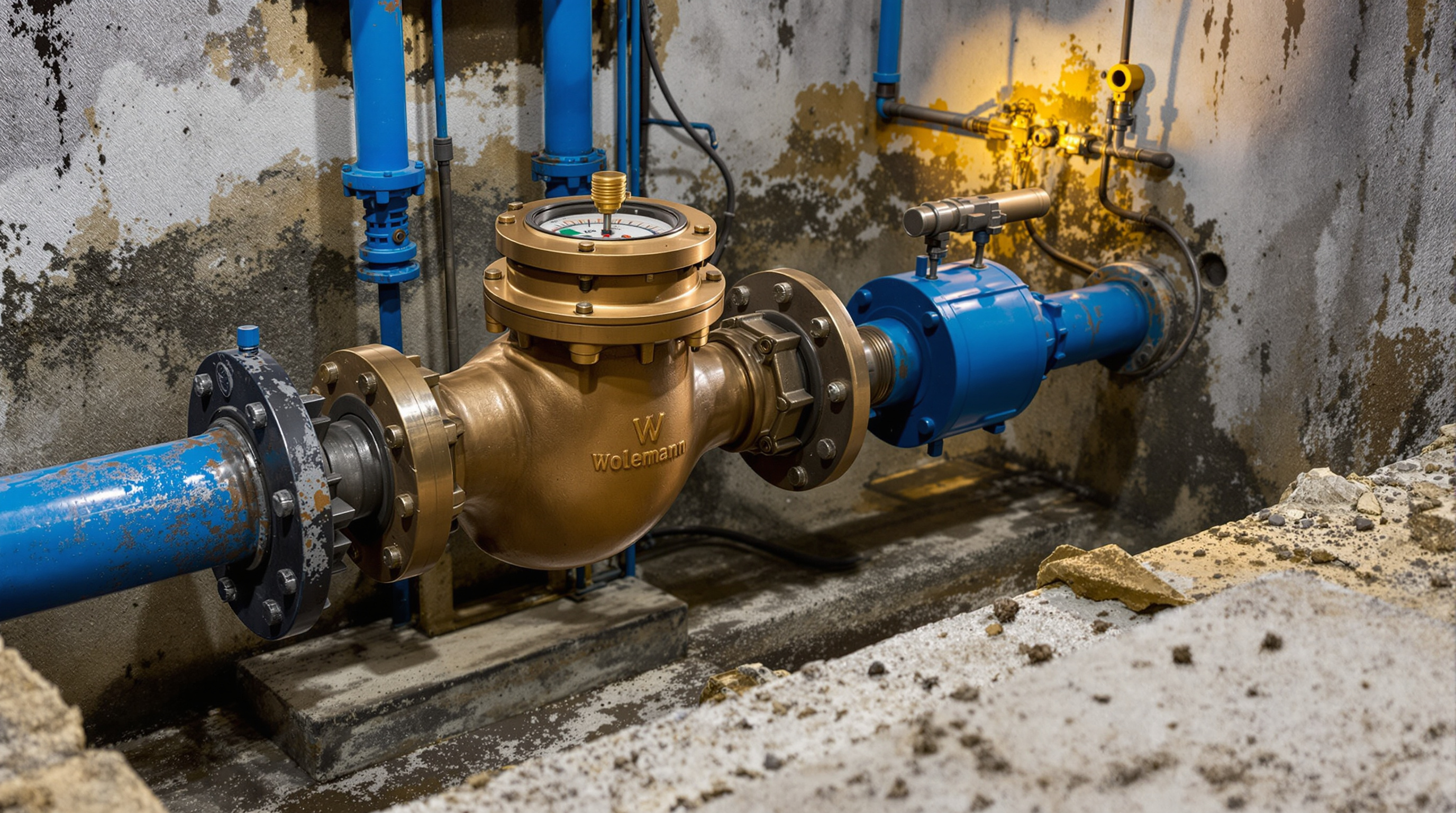
For larger mains, the Woltmann meter is the classic choice. Water flowing through the body spins a helical rotor (a helix or "screw") aligned with the flow; the rotation rate is proportional to velocity and hence to volume. Woltmann meters come as horizontal (WP) or vertical (WS) designs and handle large line sizes — DN50 up to DN500 and beyond — with low head loss, which is why they meter district supplies and industrial intakes. The product family included WP-Dynamic sizes from 2 inch to 10 inch.
Multi-Jet Meters
For smaller service connections, the multi-jet meter drives an impeller with several tangential jets of water, averaging the flow around the rotor for good low-flow sensitivity and long-term stability. Multi-jet meters are a mainstay of residential and small-commercial billing.
Accuracy Classes and ISO 4064
Water meters are classified by their accuracy across the flow range under ISO 4064, using ratios such as R160 or R400 that express how wide a range the meter stays accurate over (a higher R value means better low-flow performance relative to maximum flow). For revenue metering, that low-flow accuracy is where the money leaks — a meter that under-reads the trickle of night-time demand loses utilities real revenue over millions of connections. Our calibration page explains the accuracy-class framework in more depth.
In-Service Verification
Because a revenue meter's reading is a billing figure, most jurisdictions require periodic re-verification rather than trusting the factory certificate indefinitely. Utilities either sample a population statistically and test it on a rig, or prove large mains meters in place against a portable reference. Either way the outcome is a documented comparison — and as the calibration and accuracy page sets out, it is the certificate rather than the nameplate that supports the invoice.
Mechanical vs. Static
Mechanical Woltmann and multi-jet meters remain everywhere for their reliability and self-powered operation, but the industry is steadily adopting static meters — electromagnetic and ultrasonic designs with no moving parts — for their sustained low-flow accuracy and smart-metering data. Those alternatives are covered on our electromagnetic and flow meter types pages.
Related Reading
For the broader picture, see types of flow meters and the selection guide.