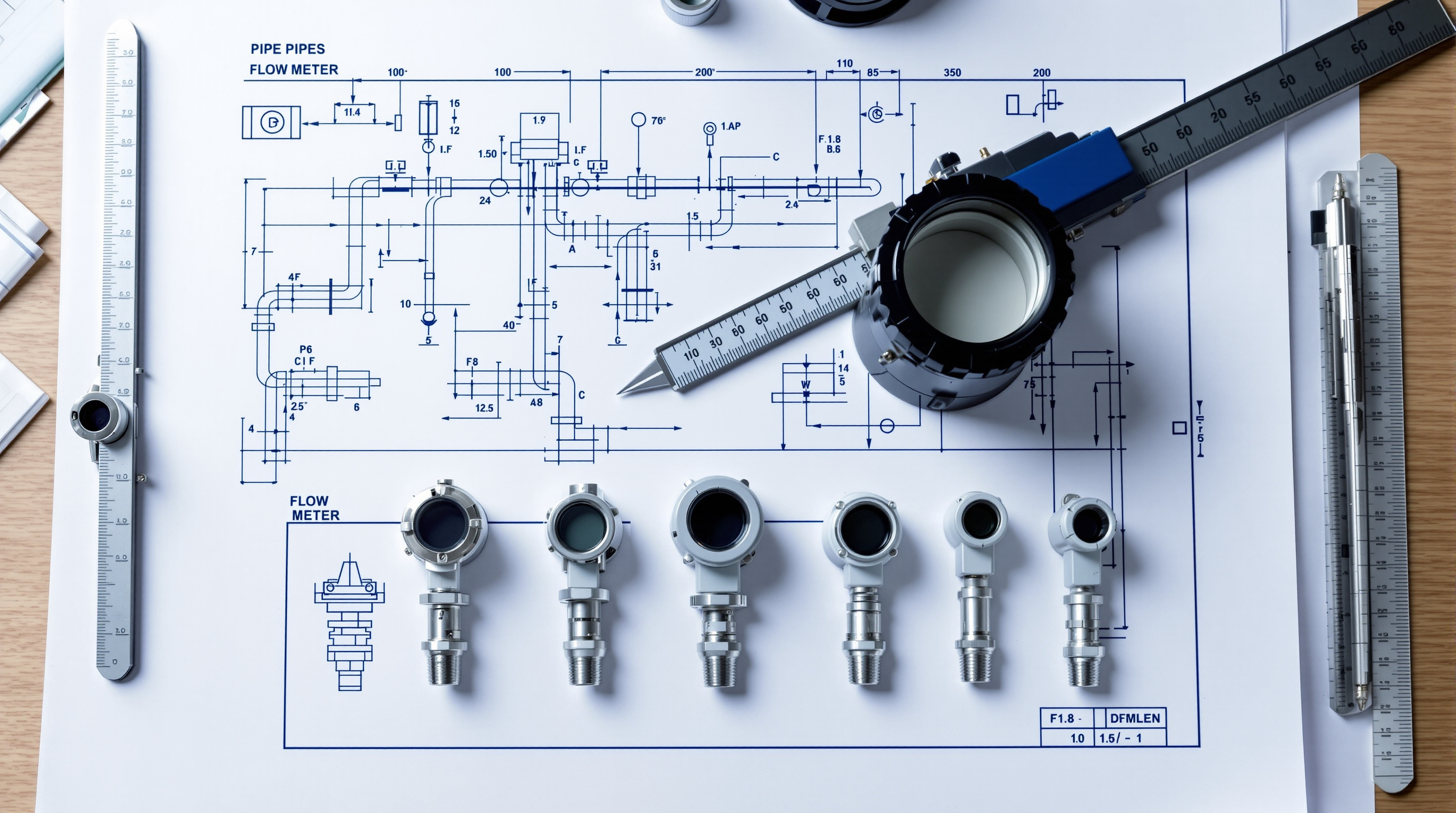
Choosing a flow meter is an exercise in matching the physics of an instrument to the reality of your fluid and your pipe. Get the fluid properties right and the shortlist almost writes itself. This guide walks through the questions that matter, in the order that matters.
1. What Is the Fluid?
The single most decisive question. Two properties dominate:
- Conductivity. Is the fluid electrically conductive? If yes (water, wastewater, acids, slurries), an electromagnetic meter is often the best answer. If no (oil, fuel, solvents, ultrapure water), a mag meter is impossible and you turn to positive-displacement, Coriolis, turbine or ultrasonic.
- Viscosity. Thick fluids favour positive-displacement meters, which actually improve with viscosity, and defeat turbine and differential-pressure meters, which are calibrated for turbulent flow.
Also weigh cleanliness (solids abrade or jam mechanical meters), corrosivity (drives liner and electrode choice), and whether the fluid can flash to vapour.
2. Volume or Mass?
If your process, contract or reaction is defined by mass — chemical dosing, custody transfer, combustion — a Coriolis meter measuring mass directly avoids the density-correction headache. If volume is what you bill or batch, a volumetric technology is simpler and cheaper. Revisit the volumetric vs. mass distinction if this is unclear.
3. What Is the Flow Range?
Know your minimum, normal and maximum flow, not just the peak. Then match the meter's turndown so that normal flow sits comfortably in the accurate middle of its range, never at the very bottom. Oversizing "to be safe" is the most common selection error: a meter that spends its life at 10% of full scale is a meter measuring badly. Size the meter to the flow, not to the pipe.
4. What Accuracy Do You Actually Need?
Accuracy costs money. Custody transfer may justify a Coriolis or a proved PD meter at ±0.1–0.2%; a pump-protection indicator is happy with ±2% from an inexpensive variable-area meter. Decide the consequence of error first, then buy exactly the accuracy that consequence warrants — and remember that repeatability may matter more than absolute accuracy for control and batching, as the calibration page explains.
5. Line Size, Pressure and Temperature
Large lines shift the economics toward clamp-on ultrasonic meters, whose cost barely rises with diameter, and away from Coriolis, whose cost and weight climb steeply. Check the meter's pressure and temperature ratings against process extremes, and account for the permanent pressure drop a meter adds — significant for PD and differential-pressure designs, near zero for mag and ultrasonic.
6. Installation Constraints
How much straight pipe run do you have? Velocity-based meters need several diameters upstream and downstream to see an undisturbed flow profile; PD and Coriolis meters do not. Is the pipe always full? A mag meter demands it. Can you break into the line at all, or do you need a non-invasive clamp-on retrofit? Vertical or horizontal? These practical limits often decide between two otherwise-equal candidates.
7. Lifecycle and Maintenance
Mechanical meters (PD, turbine) have parts that wear and need periodic recalibration; electronic meters (mag, Coriolis, ultrasonic) have no moving parts and drift slowly. Factor in strainers, access for proving, and spares. The cheapest meter to buy is frequently not the cheapest to own.
8. What Documentation Will You Need?
Shortlists are usually decided on physics and price, then unpicked later by paperwork. Ask early what the duty actually requires: a calibration certificate at named test points across your operating range rather than at full scale alone, a traceability statement, a liner and wetted-materials compatibility declaration, and — for custody transfer or regulated water — evidence that the pattern is approved under the relevant standard. Two meters with the same headline accuracy can differ sharply in what they are able to prove, and the one that cannot produce a defensible certificate costs more in disputes than it saved at purchase.
A Simple Decision Path
- Conductive water or slurry, full pipe → electromagnetic.
- Viscous oil or fuel, clean → positive-displacement.
- Mass, high value, budget available → Coriolis.
- Large pipe or retrofit, clean liquid → ultrasonic.
- Steam or gas → vortex or differential-pressure.
- Cheap local indication → variable-area.
Treat that as a starting point, then confirm against the fluid, the range and the installation. For manufacturer-neutral engineering practice, the ISA is a good reference. When you have a shortlist, our meter-type and brand pages fill in the detail.