Independent technical reference. Not affiliated with, endorsed by, or a distributor for Oval Corporation or any manufacturer. "Oval" is used here to describe the oval-gear measurement technology.
The oval-gear meter is one of the most widely used positive-displacement designs, prized for accuracy on viscous and lubricating liquids. Its name comes from the pair of oval-shaped rotors at its heart, and both the technology and the manufacturer named Oval are strongly associated with it.
Two Ovals, One Precise Volume
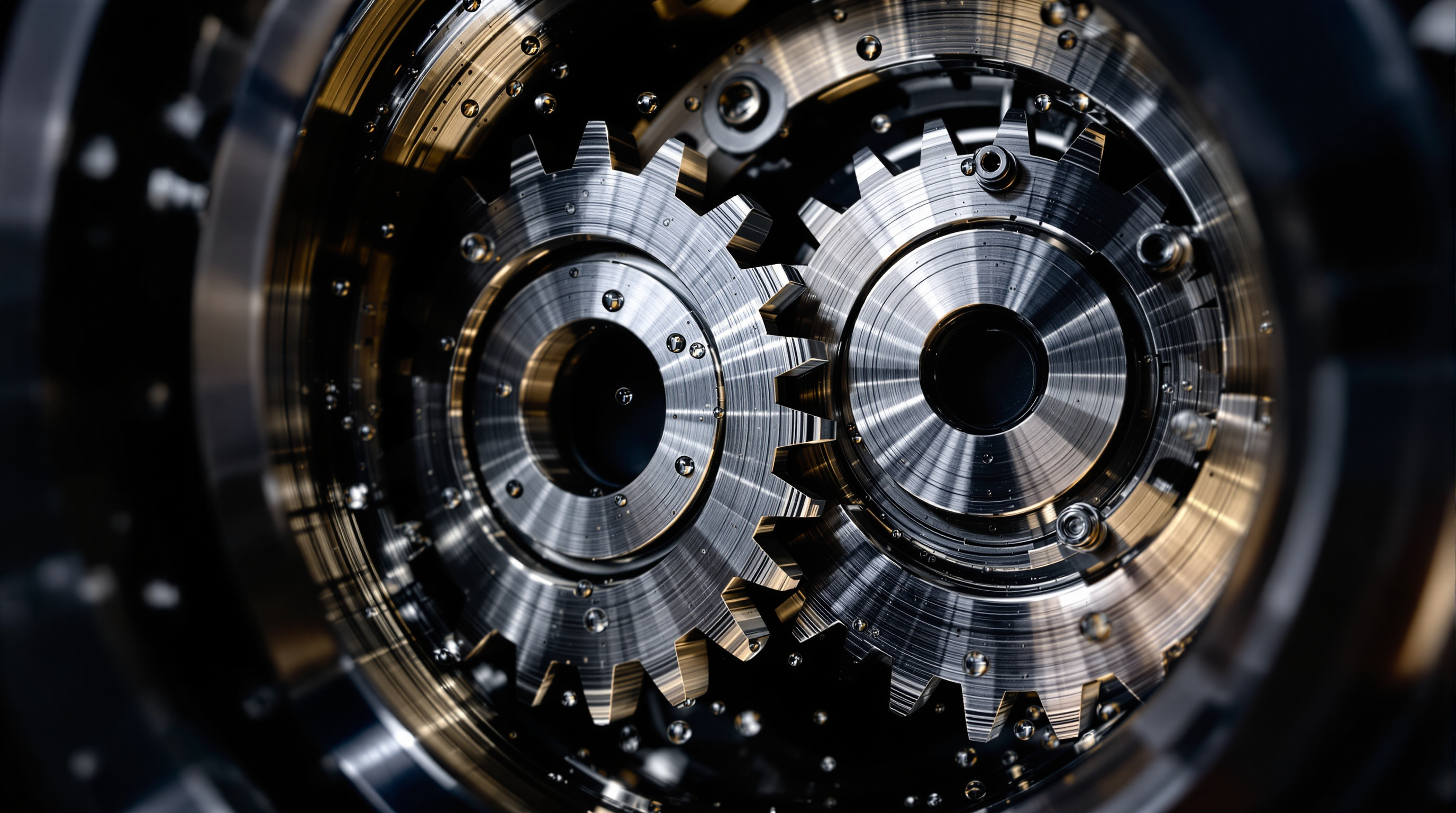
Inside the meter, two oval gears mesh and rotate in a close-fitting chamber. As fluid enters, it cannot pass straight through; instead, each rotation carries a fixed crescent-shaped volume of liquid — trapped between a rotor and the chamber wall — from inlet to outlet. Count the rotations and you have measured the volume directly. Because the trapped volume is set by machining, the meter is inherently linear and, like all PD meters, needs no straight pipe run.
Made for Viscous Fluids
Oval-gear meters excel exactly where velocity-based meters struggle. Higher viscosity improves the seal between rotor and chamber, cutting slip and raising accuracy — routinely ±0.1–0.5% of reading on oils, syrups, fuels, solvents and lubricants. They are equally at home dosing additives and metering hydraulic fluid on a test rig. The trade-off is the usual PD caveat: keep solids out with a strainer, avoid vapour, and expect a modest pressure drop.
Digital and Analogue Outputs
Modern oval-gear meters pair the mechanical measuring element with electronic pickups to give pulse or 4–20 mA outputs, batch control and local digital displays, while retaining the option of a purely mechanical register that needs no power. The compact oval-gear meters associated with Macnaught and the digital Flomec OM-series are typical examples of the small-to-mid-line format.
Typical Sizes
Oval-gear meters are common from about 1/4 inch (DN8) up to 4 inch (DN100) and beyond, covering dosing flows of a few litres per hour up to bulk transfer of hundreds of litres per minute. Match the size to the flow, not the pipe, so normal flow sits in the accurate part of the range — see the selection guide.
For broader mechanical-measurement practice, the American Society of Mechanical Engineers (ASME) publishes useful independent guidance.
Related Reading
Read the underlying positive-displacement principle, compare with fuel-oriented Liquid Controls rotary meters, or browse all flow meter types.