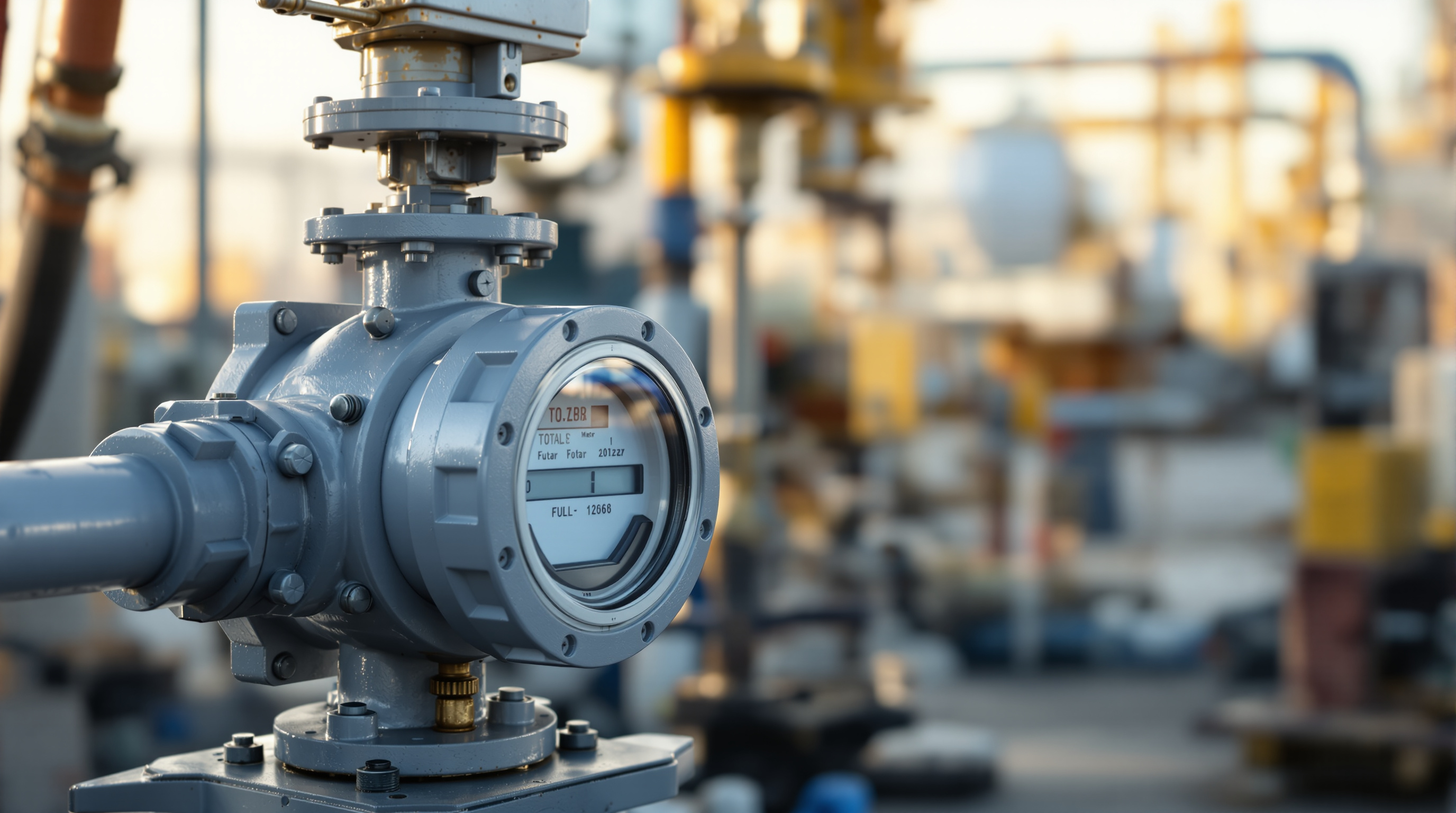
Independent technical reference. Flow Meter Reference is not affiliated with, endorsed by, or a distributor for Tokico or any manufacturer. The name is used only to describe a well-known class of positive-displacement fuel meter.
The Tokico name is closely associated with rotary positive-displacement flow meters for fuel and oil — the sturdy mechanical meters long seen on fuel depots, dispensing skids and tanker loading racks across Asia and beyond. This page explains the technology those meters represent rather than offering any product.
The Operating Principle
Meters of this type are positive-displacement designs, typically using a rotary-piston or rotor mechanism. Fuel entering the measuring chamber drives the element through a fixed cycle, each cycle displacing a precisely known volume. A mechanical register or a pulse pickup counts the cycles and totalises the throughput. Because the volume per cycle is fixed by machining, the meter measures fuel directly rather than inferring it from velocity — the reason PD meters remain the backbone of fuel custody transfer.
Why PD for Fuel
Diesel, gasoline, kerosene and light oils are clean but only modestly conductive and often viscous — a combination that rules out electromagnetic meters and challenges turbines at low flow. A PD meter thrives here: the fluid film seals the internal clearances, keeping slip low and accuracy high. Good rotary PD fuel meters hold roughly ±0.2–0.5% of reading with strong repeatability, which is what custody transfer under standards like OIML R117 and the API MPMS demands. See our calibration and accuracy page for what those standards require.
Common Sizes and Configurations
Fuel PD meters in this family span the small-line to bulk-line range, commonly:
- DN15–DN25 (1/2–1 inch) — dispensing and small transfer duties.
- DN40–DN50 (1.5–2 inch) — workshop and mid-flow transfer.
- DN80–DN150 (3–6 inch) — bulk loading, depots and tanker racks.
Options typically include mechanical or electronic registers, preset batch controllers, temperature compensation for volume correction, and air eliminators upstream to prevent vapour being metered as liquid. Representative reference pages on this site include the 6-inch DN150 bulk meter and the 1-inch DN25 size.
Installation and Care
PD fuel meters need a strainer upstream to keep grit out of the fine clearances, and an air eliminator where entrained vapour is likely. They should be protected from pressure surges, which force slip up and can damage the mechanism. With those precautions and periodic proving, a rotary PD fuel meter delivers years of accurate, repeatable service.
Related Reading
Compare the closely related Liquid Controls rotary meters, review the underlying positive-displacement principle, or see the full flow meter types comparison.