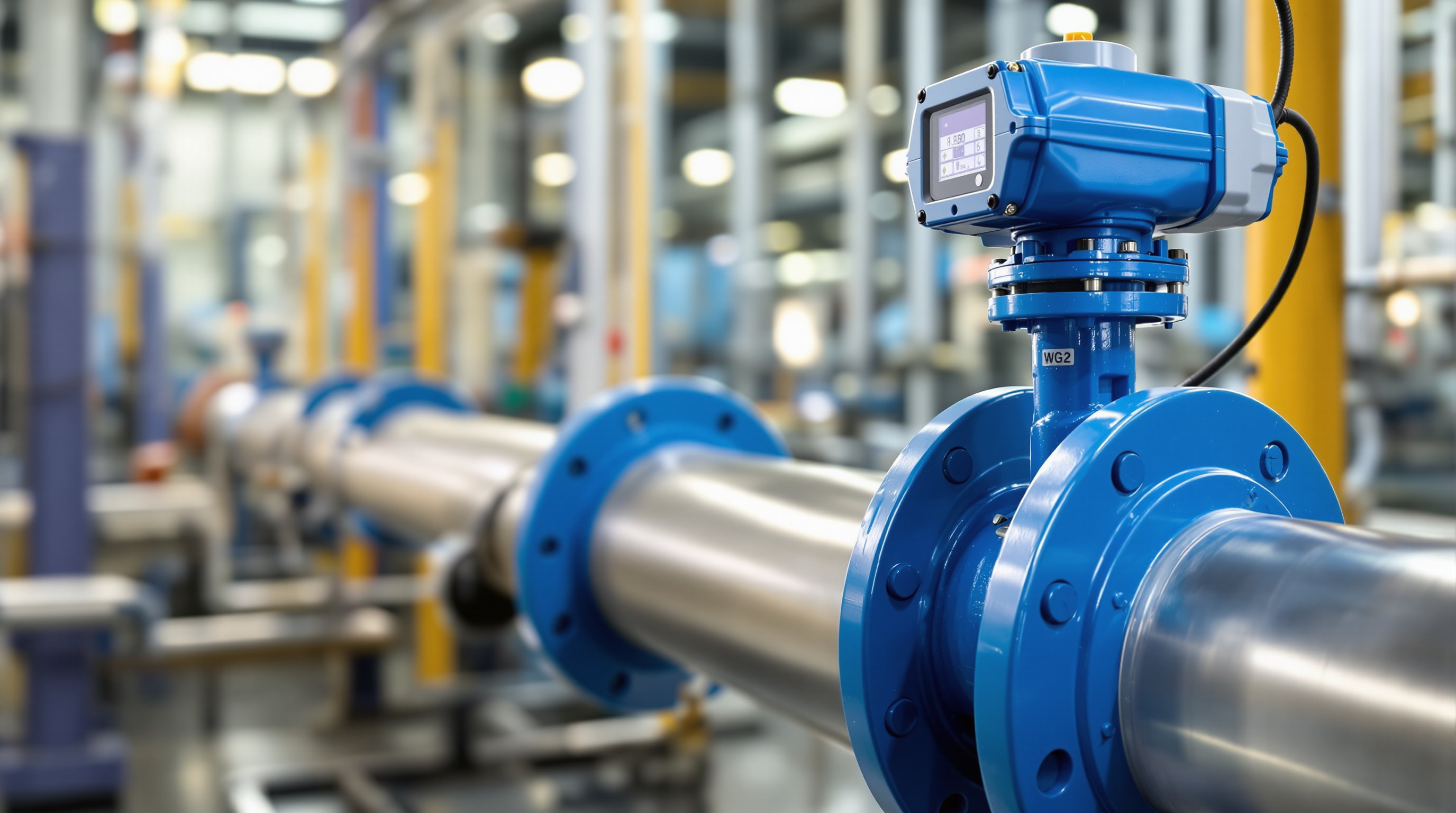
The electromagnetic flow meter — universally shortened to "mag meter" — is one of the most elegant instruments in the field. It has no moving parts, no obstruction in the bore, and no pressure drop, yet it measures the flow of water, slurry and chemicals with excellent accuracy. Its one firm rule: the fluid must conduct electricity.
Faraday's Law in a Pipe
Michael Faraday showed that a conductor moving through a magnetic field generates a voltage. A mag meter turns the flowing liquid itself into that conductor. Field coils around the pipe create a magnetic field across the bore; as conductive fluid flows through it, a voltage develops between two electrodes set in the pipe wall, at right angles to both the field and the flow. That voltage is directly proportional to the average velocity of the fluid. Multiply by the known bore area and you have volumetric flow — with beautifully linear response and nothing intruding into the stream.
The Conductivity Requirement
Because the fluid must act as the moving conductor, it needs a minimum electrical conductivity, typically around 5 microsiemens per centimetre (some designs go lower). Ordinary water, wastewater, acids, caustics, slurries and food liquids qualify easily. What does not qualify: oils, fuels, solvents, deionised/ultrapure water and other non-conductive fluids. This single fact is why a mag meter is perfect for a water main and useless for a diesel line — the mirror image of the positive-displacement meters described on our PD page.
Liners and Electrodes
The bore is lined with a non-conductive material so the signal is not shorted out, and the liner also handles corrosion and abrasion. Common choices:
- Liners: PTFE and PFA for chemicals and hygienic duty; polyurethane and hard rubber for abrasive slurries; ceramic for the most aggressive service.
- Electrodes: stainless steel for general water; Hastelloy, tantalum, titanium or platinum for corrosives.
Matching liner and electrode to the fluid is the core of specifying a mag meter correctly. The magnetic and process-meter technology associated with makers such as Krohne centres on exactly these material and field-drive choices.
Accuracy and Rangeability
Modern mag meters achieve ±0.2% to ±0.5% of reading with turndown of 20:1 or more, and because there are no bearings or gears to wear, that accuracy holds for years. They are bidirectional, tolerate solids that would destroy a turbine or PD meter, and — with a full bore — cause no measurable pressure loss.
Installation Matters
A mag meter must run full; a partially filled pipe gives a false low reading, so meters are best mounted in a low point or a vertical up-flow leg. Provide a few diameters of straight run upstream, keep the electrodes out of the top of the pipe where air collects and the bottom where sediment settles, and ensure good grounding — stray currents corrupt the millivolt-level signal. Get those basics right and a mag meter is close to fit-and-forget.
Checking a Mag Meter in Place
Because there is nothing to wear, a mag meter's failure modes are electrical rather than mechanical, and most can be checked without breaking into the line. A zero check at genuinely no flow — valves shut, pipe still full — exposes offset drift; measuring insulation and electrode resistance catches a coating building on the electrodes or a breached liner; and comparing coil resistance against the factory value flags a damaged coil. Manufacturers increasingly build these tests into the transmitter as a verification routine producing a pass/fail record. It is useful maintenance evidence, but it confirms the meter is behaving as it did when calibrated rather than replacing a calibration against a reference.
Typical Applications
Municipal water production and distribution, wastewater and sludge, mining slurries, pulp stock, chemical dosing, and food and beverage. For a specific example of a wafer-style mag meter, see the Optiflux 1050 reference, or compare technologies on the flow meter types page.
The induction principle behind these meters is also described in water-science references such as those published by the U.S. Geological Survey.